
Jordana Dambros
You just discovered that the mixer from the Linea 40 collection hasn’t been available in polished chrome for three months. In Italy, the product sheet has been updated, while in the German catalog, that finish still appears. On the French website you aren’t sure, and someone, somewhere, should probably also check the e-commerce store.
That is likely how you ended up searching for information on multilingual catalog management.
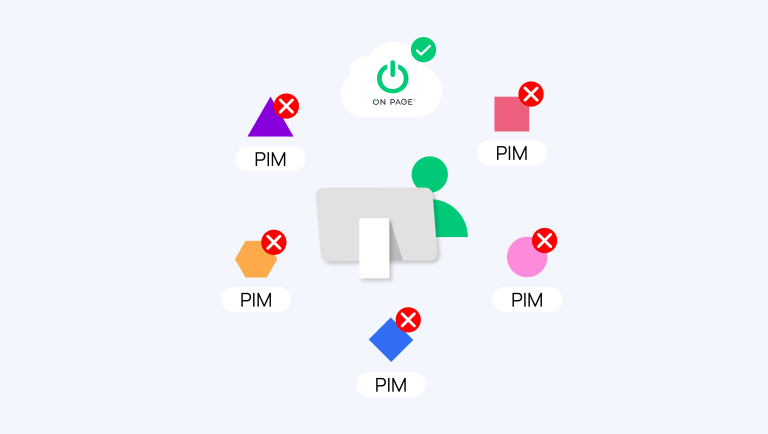
We are sorry to say it: the problem isn’t really the languages, but continuing to manage them as separate worlds.
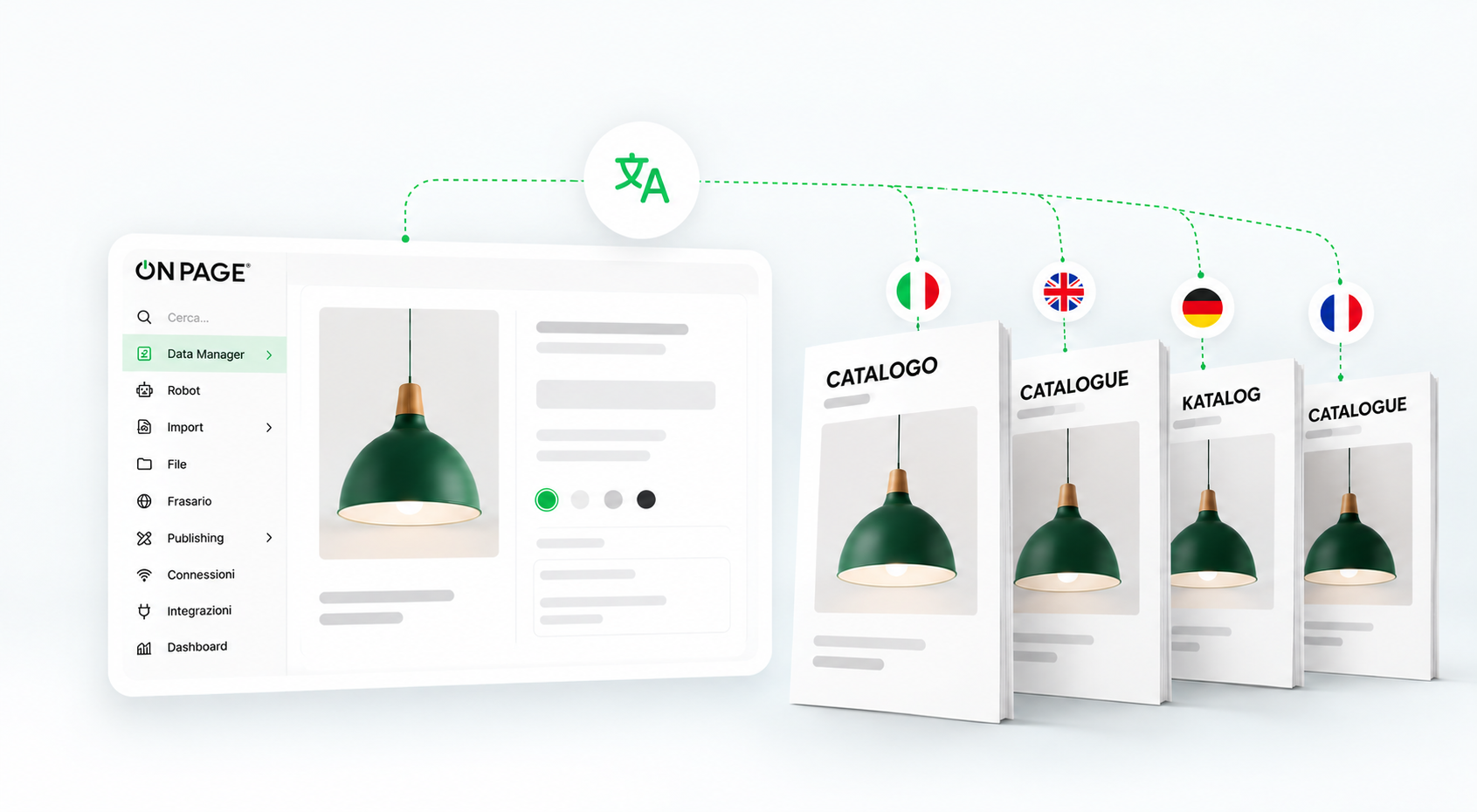
A PIM allows you to start from a single piece of product information and govern its translations, updates, revisions, and multilingual publishing.
The principle is simple: automate what is repetitive and rely on expert linguists for what requires interpretation and creativity. This is the case for texts with a strong cultural or emotional component, where transcreation comes into play. But what is it about?
Here is why it is worth continuing to read.
Multilingual catalog management: the problem comes after translation
Creating the first English version of a catalog isn’t that difficult.
The fun part comes six months later, when 40 product sheets change, along with two materials, three codes, a claim, and maybe even a few certifications.
At that point, the question becomes: which translations need to be updated?
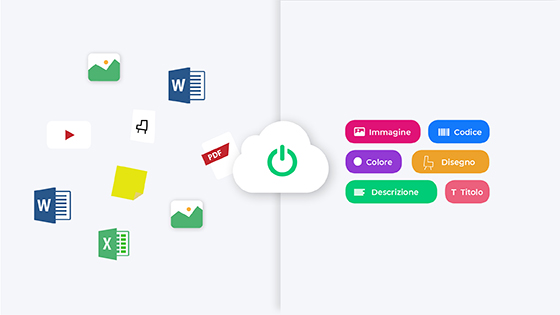
If the content is scattered across Excel, other files (who knows which ones), or documents you didn’t even remember existed, rebuilding this relationship becomes a job in itself.
That is why, in our view, talking only about translation is reductive.
The real challenge of multilingual catalog management is keeping the same information consistent over time across different languages, markets, and channels.
Multilingual catalog management: one product, many versions
The first shift in perspective is to stop thinking in terms of documents: Italian catalog, English catalog, French catalog.
There is only one product; it is its versions that multiply.
With a PIM, descriptions, technical attributes, materials, units of measure, and other content are managed within a central database alongside their linguistic variants.
The information “maximum temperature: 180 °C” lives in a single repository, around which different descriptions, translations, and content can exist per language and channel.
If tomorrow that value becomes 200 °C, you don’t need to remember which files it was written in months ago. The change originates at the source and becomes immediately traceable across the dependent versions.
This, more than translation itself, is what makes multilingual management sustainable.
Automating translations and multilingual publishing
There is also a huge amount of work that companies continuously carry out without any real reason.
Recurring words, formulas, and descriptions can be centralized and reused, improving both speed and terminological consistency.
In On Page®, for example, the Phrasebook allows you to manage reusable content and translations within the editorial process.
From here, you can build more efficient workflows: identify new or modified text, trigger translation, check status, and distribute approved content across different touchpoints. Obviously, a description must not only be correct in English, but it must also be so on the website, e-commerce, marketplace, and PDF catalog.
Transcreation: when translation isn’t enough
Take a company that produces designer lamps. In the spec sheet for a pendant light, we find data like 3000 K, 18 W, satin brass finish. Here, precision is required: information must remain identical in every language.
Then, however, comes the slogan: “The light that sets the mood.”
Translating it word for word may yield a correct sentence, but one that feels unnatural or ineffective, because here we are transferring tone of voice and a brand promise.
This is where transcreation (translation + creation) comes in: the creative adaptation of a message to maintain, in the target language, the same communicative impact as the original.
Maka, our partner, works specifically on this type of content, adapting marketing copy, slogans, and brand communication for different markets.
Because of this, when managing a multilingual catalog, it is useful to distinguish content from the start: data must remain identical, messages must remain effective.
You need a single source of truth
If you reached this point because a change got lost across various catalogs, we hope one thing is clearer now: what you need to do is build a system where every update has a precise starting point and an equally clear workflow.
That way, the next time a product sheet changes, you won’t have to open five files, send three emails, and rely on someone’s memory.
And frankly, that is no small feat.
FAQ
With a PIM, language versions remain linked to the same product information, making it easier to identify which content needs to be reviewed after an update.
By centralizing terms, descriptions, and pre-approved translations, you can reuse them wherever they recur, reducing duplicate work and terminology inconsistencies.
Multilingual publishing becomes much more manageable when all channels start from the same database, rather than being updated separately.
It depends on the type of content. Technical data, attributes, and terminology primarily require accuracy and consistency. Slogans, commercial descriptions, and brand editorial content, on the other hand, may require transcreation to maintain tone and impact in the target market.

Centralize, update, publish. Without starting from scratch every time.
Discover how On Page® centralizes and synchronizes product information.