
Mattia
Updated on August 18, 2026
Marketing, sales and technical teams may work with different information, while price lists, product sheets, websites and e-commerce platforms require continuous updates. These challenges slow down daily operations, increase the risk of errors and make it harder to communicate products consistently across markets.
Here are ten common product information management challenges and how PIM software can help companies address them.
Product information needs to be distributed consistently across:
- catalogs, price lists, technical sheets and manuals;
- websites, e-commerce platforms and applications;
- marketplaces and B2B portals.
10 common product information management challenges
1. Inconsistent product information across departments
Marketing, sales and technical teams may use different versions of the same product information. This creates uncertainty, additional verification requests and delays.
PIM software provides a shared environment where each department can access and update product information according to its role. Teams can therefore work with consistent and up-to-date content.
To explore roles, responsibilities and approval processes, read our guide to Product Data Governance.
2. Repeating the same updates across multiple systems
When product information is distributed across several business systems, every change may need to be entered manually in multiple places. This increases the operational workload and the risk of publishing conflicting information.
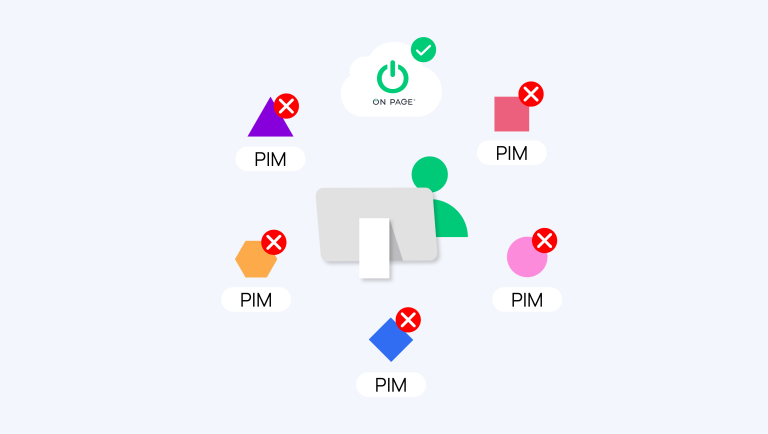
A PIM connects with other business systems and centralizes the information used to communicate products. Updates can be managed once and distributed to connected channels.
Discover how On Page® integrations connect PIM software with e-commerce platforms, CMSs and other business applications.
3. Relying on technical skills for routine updates
Updating product descriptions, specifications and attributes should not require programming skills or constant technical support.
A PIM with an intuitive interface allows authorized users to organize and enrich product information independently. Marketing, sales and technical teams can manage the activities for which they are responsible without slowing down the entire process.
4. Taking too long to prepare quotations and product documentation
Sales teams need fast access to current prices, specifications, variants and supporting documentation. Searching for and verifying every detail delays quotations and can undermine credibility in front of customers.
Centralized, structured information makes the required content easier to retrieve. It can also be used to generate up-to-date product documentation, including technical sheets and price lists.
Learn more about creating effective technical product sheets with a PIM.
5. Publishing outdated or inconsistent price lists
Prices, product codes, variants and commercial conditions change frequently. If updates do not reach every sales tool, agents and distributors may continue using obsolete information.
PIM software helps companies govern these updates and keep price lists aligned with the information available on the platform. Sales teams can respond to customers with greater confidence and reliability.
For a closer look at the commercial impact of incorrect information, read our article on B2B product catalog and price list errors.
6. Managing translations across different markets
Entering international markets requires consistent product descriptions, specifications and terminology in multiple languages. Manual translation processes multiply revisions and make it difficult to keep every language version aligned.
A PIM organizes multilingual product information and supports a shared terminology database. Approved terms can be reused consistently, simplifying future updates and reviews.
7. Incomplete information on e-commerce platforms and marketplaces
E-commerce platforms and marketplaces require complete, structured information adapted to the specifications of each channel. Missing attributes or outdated descriptions can delay publication and weaken product presentation.
By centralizing product information, a PIM makes it easier to distribute products, variants, descriptions and specifications to connected digital channels with greater consistency and speed.
Find out how to choose a PIM for e-commerce.
8. Losing control over changes and approvals
When several people work on the same product information, it can become difficult to understand what was changed, who made the change and when it happened. Local corrections may create conflicting versions and further verification work.
A PIM allows companies to assign roles and permissions, coordinating contributions from different departments. Changes follow a more structured process, while responsibilities become clearer.
9. Slow product publishing processes
Launching a new product can take weeks when information has to be collected, checked and adapted separately for every channel.
Structured and current product information makes digital publishing faster and supports the generation of product documentation, including technical sheets and price lists. Products can reach customers and distributors sooner, improving time to market.
10. Limited collaboration without a shared platform
Teams in different locations, external partners and international offices need access to product information without multiplying requests and verification steps.
A cloud-based PIM makes product information available to authorized users wherever they work. Collaboration becomes more efficient while the company maintains centralized governance over access, changes and publishing.
How On Page® simplifies product information management
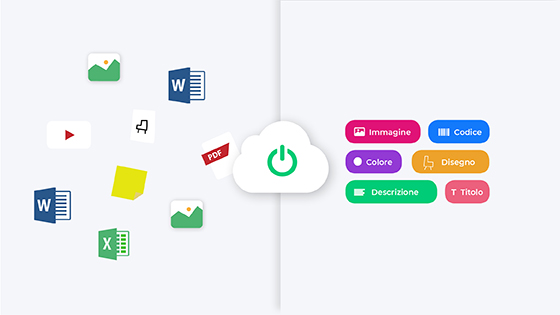
On Page® centralizes product descriptions, technical specifications, prices, images, videos, translations, models, finishes and related accessories in a single platform.
Marketing, sales and technical teams can contribute according to their responsibilities, working with shared and current product information. Integrations and automated processes then make it easier to distribute that information across websites, e-commerce platforms, marketplaces, applications and product documentation.
Information is managed once and reused wherever the company communicates its products, reducing repetitive activities, inconsistencies and publishing delays.

Centralize, update, publish. Without starting from scratch every time.
Discover how On Page® centralizes and synchronizes product information.