
Martina Pizzutto
Updated on August 13, 2026
Does your company manufacture or sell thousands of products? Is the information needed to describe them distributed across different systems, documents and departments?
In this article, we explain what PIM is, how it works and the role it can play in managing and distributing product information.
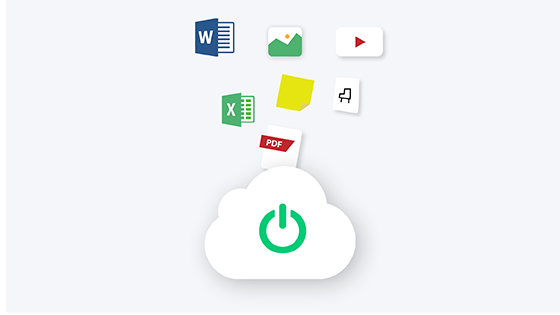
PIM stands for Product Information Management. It is a system used to centralize, organize, enrich and distribute product information. PIM software enables marketing, sales and technical departments to work from a shared source and publish more consistent information across catalogs, price lists, technical data sheets, websites, e-commerce stores and other channels.
Companies have long used software to manage administrative, production and commercial activities. Today, it is equally important to organize the information used to present and communicate products to the market.
This need goes beyond internal organization. Accurate, structured and easily accessible product information supports more efficient sales and communication processes.
Without a centralized source, marketing teams spend a considerable amount of time checking and aligning content that has been copied into different destinations, including catalogs, price lists, websites, e-commerce stores, marketplaces and documentation in multiple languages.
A Product Information Management system supports this process by collecting, organizing and making product information available to different communication and sales channels.
What does PIM mean?
PIM stands for Product Information Management.
The term describes both the method a company uses to govern its product information and the software used to centralize and distribute it.
A PIM system can manage information such as:
- product codes and names;
- commercial descriptions;
- technical specifications and attributes;
- families, categories and variants;
- dimensions, materials and finishes;
- certifications and documentation;
- images, technical drawings and other digital assets;
- translations and market-specific content;
- information created for websites, e-commerce stores and marketplaces;
- relationships between products, accessories and spare parts.
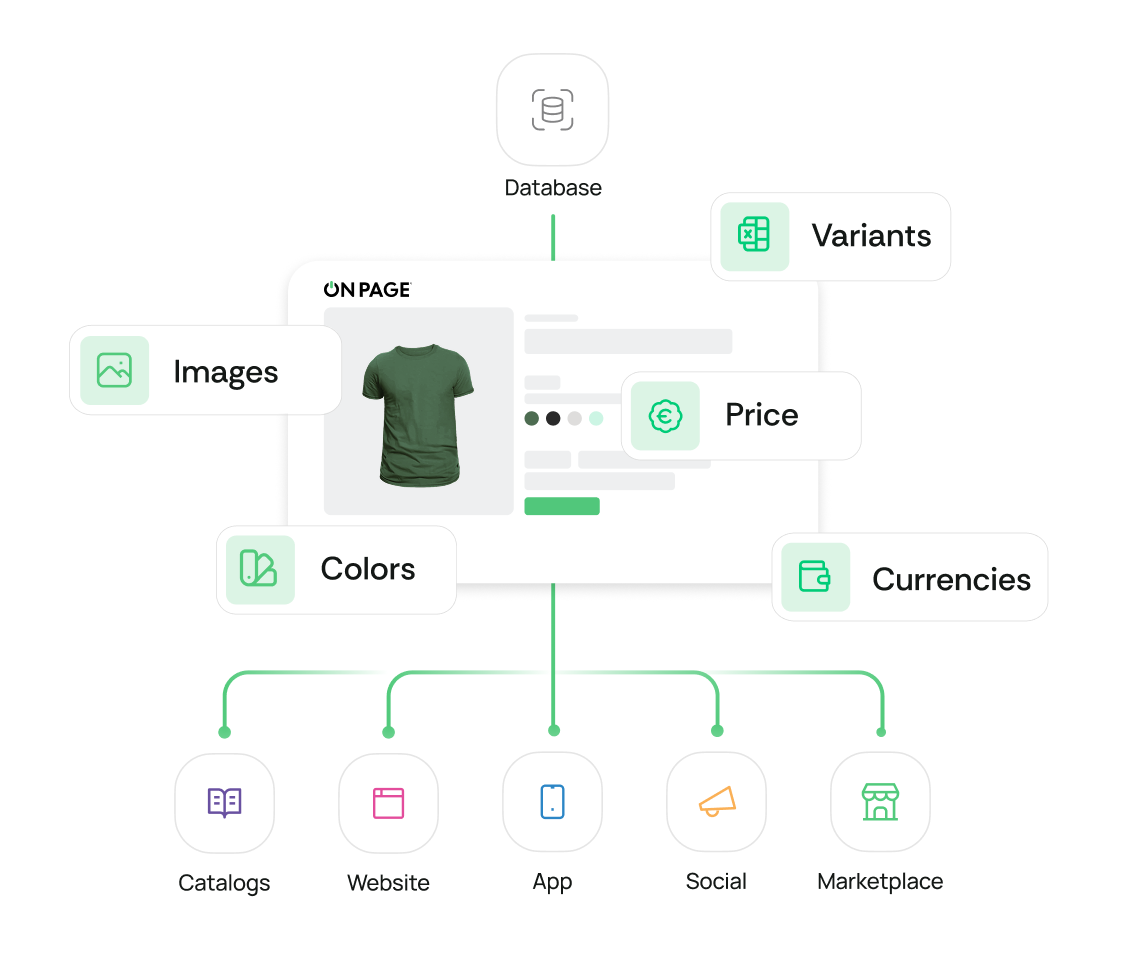
The PIM creates a shared structure that allows the same product information to be reused across different company tools and adapted when necessary to each market, language or destination channel.
How does PIM software work?
PIM software receives information from the sources used by the company and organizes it according to a shared information model.
The process can be divided into four main stages:
- Collection: the PIM imports information from the company’s existing sources.
- Organization: products, families, variants and attributes are structured according to common rules.
- Enrichment: authorized departments complete descriptions, translations, images and commercial content.
- Distribution: product information is made available to catalogs, price lists, technical data sheets, websites, e-commerce stores, marketplaces and other connected channels.
The software therefore does more than store information. It supports updating, reviewing and reusing content while reducing the need to copy and paste it between different destinations.
When information is updated in the centralized source, it can be transferred to connected channels through configured and controlled workflows. Publication methods and timing depend on the integrations and rules established by the company.
The role of PIM within a company
Understanding the correct position of a PIM system can be difficult in organizations where product information is still managed through fragmented processes.
The PIM should play a central role in relation to the tools used to communicate products. Product information should not be organized exclusively for a single catalog, website or marketplace.
Instead, the system should:
- connect with the structured sources already used by the company;
- make information accessible to the people responsible for creating and reviewing it;
- keep product information separate from the graphic format used by individual channels;
- adapt content to the needs of different markets and destinations;
- define roles, permissions and responsibilities;
- support reviewing and updating over time.
Marketing, sales and technical departments use the same information for different purposes. The PIM provides a shared foundation, preventing each department from creating and maintaining its own version of the product.
Who uses PIM software?
PIM is a cross-departmental platform used by several teams.
Marketing
Marketing teams enrich product information with descriptions, benefits, images, translations and channel-specific content. They can work more independently without having to reconstruct technical product information every time new content is required.
Technical department
The technical department contributes to the accuracy of attributes, measurements, materials, configurations, certifications and technical documentation. It can review the information before it is distributed.
Sales department
Sales teams, agents and distributors need accurate information to answer customer questions, prepare quotations and consult the available documentation.
A shared source reduces unnecessary communication between departments and makes it clearer who is responsible for entering, reviewing and approving each piece of information.
Why is PIM adoption important?
In addition to its position within the company’s infrastructure, the usability and adoption of the PIM are critical.
The system should also be accessible to people without specialist database management skills. Software may offer an extensive set of features, but if it is difficult to use, it may never become part of the company’s everyday processes.
Adoption depends on several factors:
- ease of use;
- clearly defined roles;
- user training;
- the quality of the initial product structure;
- alignment with company processes;
- support during implementation;
- clear ownership of product information.
Introducing a PIM therefore requires both a technology decision and organizational work. Each department must understand how to use the system and how it contributes to maintaining reliable product information.
What are the benefits of Product Information Management?
Centralizing product information can improve several company processes.
The main benefits include:
- fewer manual copying and updating activities;
- greater consistency across catalogs, price lists and digital channels;
- more organized collaboration between marketing, sales and technical departments;
- easier management of thousands of products and variants;
- greater control over translations and market-specific content;
- faster product documentation updates;
- reuse of the same information across multiple channels;
- structured information that can support artificial intelligence applications.
Centralized and well-organized product information also allows the company to anticipate new publishing requirements without having to rebuild its information resources every time.
When does a company need PIM software?
A company may need to consider PIM software when it experiences several recurring conditions:
- it manages a large number of products, variants or technical attributes;
- it publishes product information in multiple languages;
- it uses several communication and sales channels;
- it frequently updates catalogs, price lists or technical data sheets;
- marketing, sales and technical departments work from different versions;
- information is fragmented across multiple systems and documents;
- launching a new product requires many manual steps;
- agents and distributors do not always receive updated information;
- the company wants to use its product information for automation and AI applications.
The need for PIM does not depend exclusively on the number of products. A smaller catalog may still involve complex structures, numerous variants, multiple markets or frequent updates.
PIM, DAM and ERP: what are the differences?
PIM, DAM and ERP perform different functions and can work together.
- PIM organizes, enriches and distributes the product information used in communication and sales.
- DAM, or Digital Asset Management, manages images, videos, technical drawings, documents and other digital assets.
- ERP manages operational processes and information such as product records, orders, stock availability and administrative activities.
The PIM can receive information from company sources, enrich it for communication purposes and make it available to destination channels. The DAM connects products with the appropriate digital assets.
For more information, read our article about the features and differences between PIM and DAM.
On Page®: PIM software for managing product information
On Page® centralizes and organizes product information, allowing the departments involved to work from a shared source.
Product information can be enriched, reviewed and used to supply:
- catalogs and price lists;
- technical data sheets and product sheets;
- websites and e-commerce stores;
- marketplaces;
- sales documentation;
- tools used by agents and distributors.
On Page® also includes DAM capabilities for connecting images and other digital assets to products. Builder can generate technical data sheets, product sheets, price lists and other documentation using the information stored in the platform.
Product information is no longer isolated inside individual documents. It becomes a shared resource that can be reused across the company.
Conclusions
The meaning of PIM goes beyond the definition of a software platform. Product Information Management introduces a shared method for organizing, reviewing and distributing the information a company uses to present its products to the market.
When marketing, sales and technical departments work from the same source, repeated updates are reduced and it becomes easier to maintain consistency between product documentation and digital channels.
Frequently asked questions about PIM
What does PIM stand for?
PIM stands for Product Information Management. It refers to both the organizational process and the software used to centralize, enrich and distribute product information.
What is PIM software?
PIM software is a platform that collects and organizes descriptions, attributes, variants, translations, images and other product information, making it available to authorized departments and channels.
What is Product Information Management used for?
Product Information Management reduces fragmented information, improves collaboration between departments and supports greater consistency across catalogs, price lists, technical data sheets, websites, e-commerce stores and marketplaces.
What types of companies need a PIM?
PIM is particularly useful for companies that manage many products, variants, attributes, languages or channels. It is also valuable when updates require numerous manual steps between marketing, sales and technical departments.
Does PIM replace other company systems?
PIM does not necessarily replace other systems. It can connect with company sources, receive information and enrich it for communication, product documentation and sales channels.

Centralize, update, publish. Without starting from scratch every time.
Discover how On Page® centralizes and synchronizes product information.